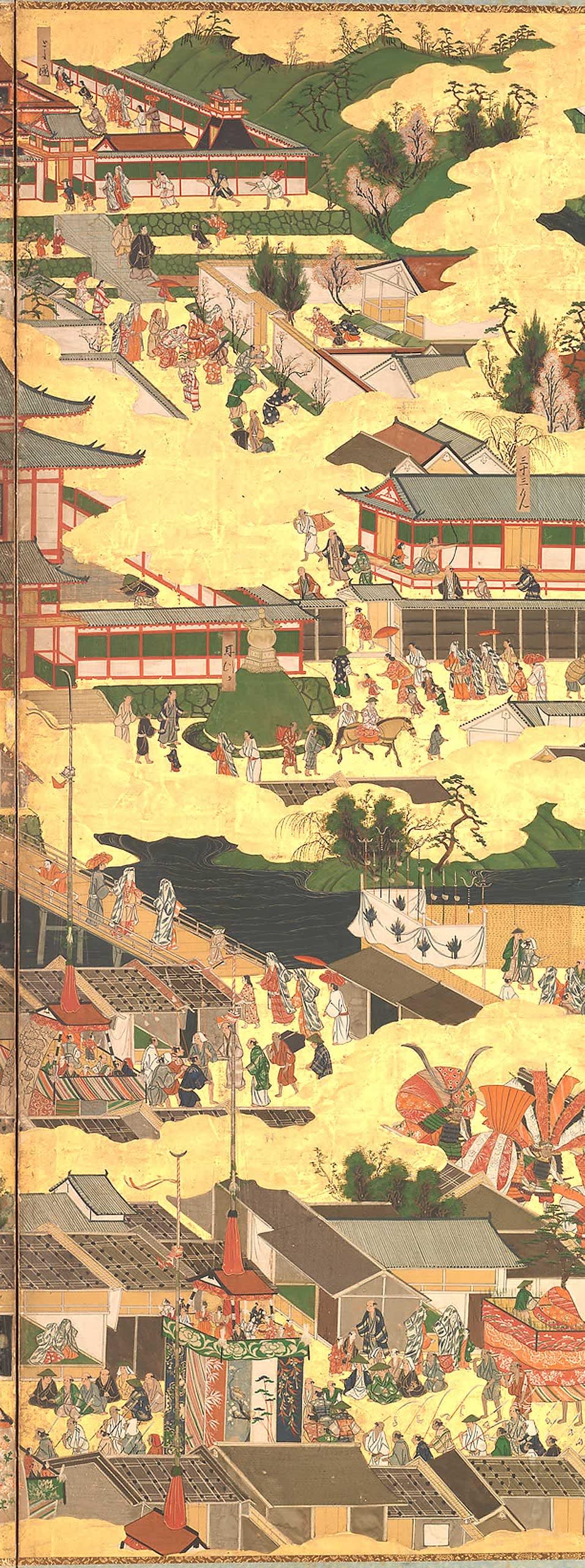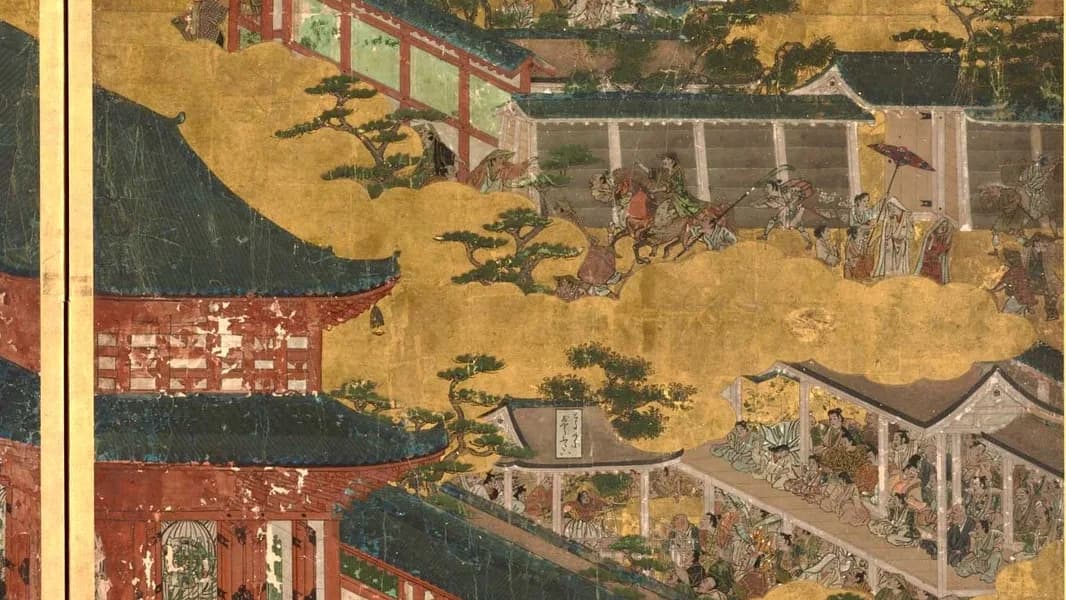
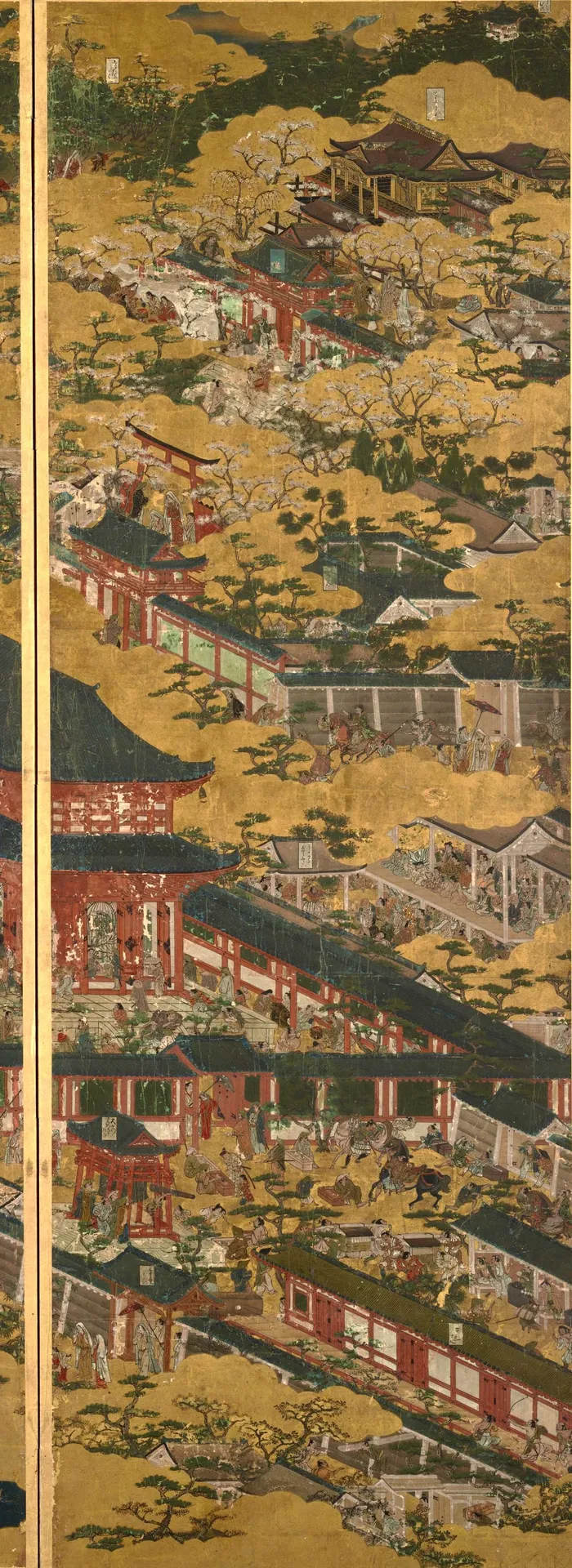
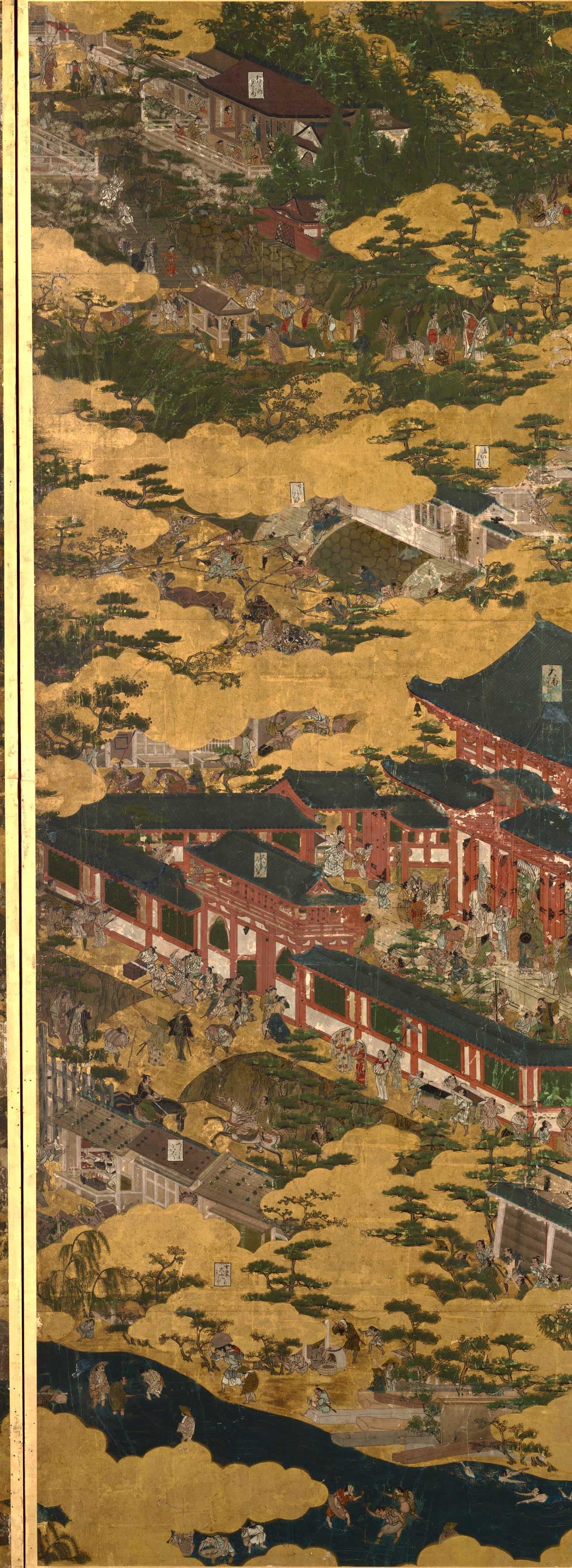
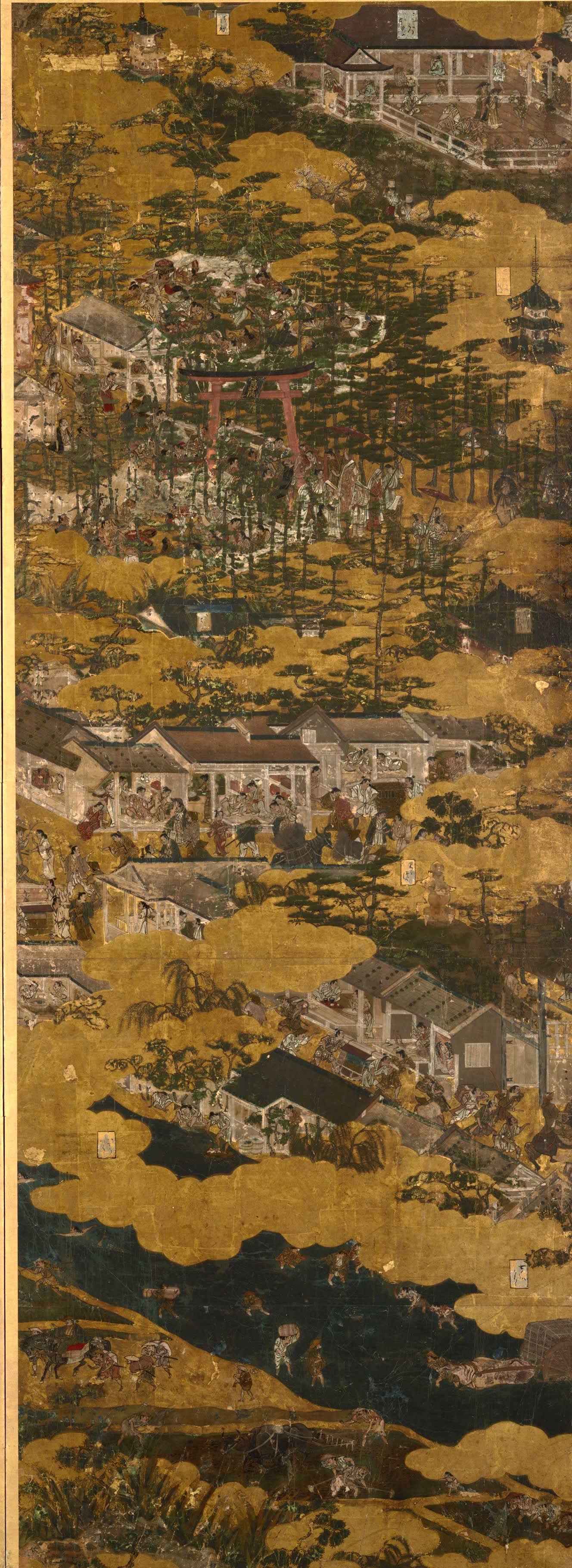
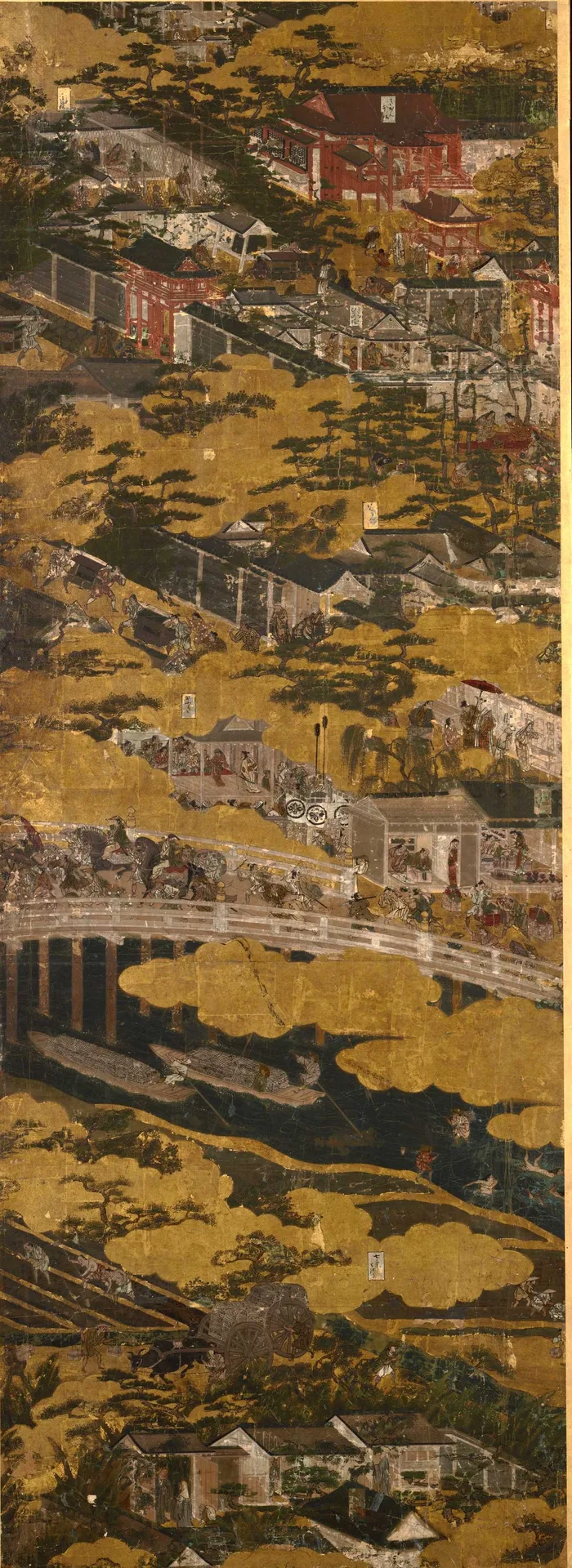
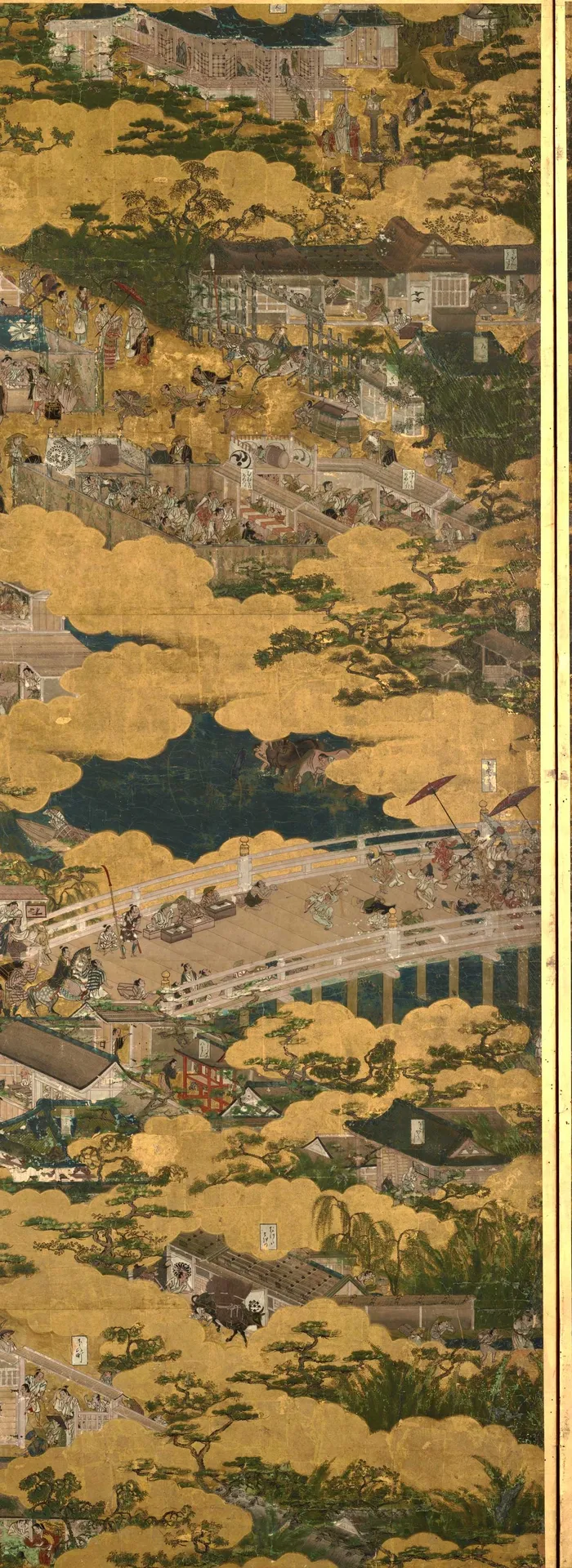
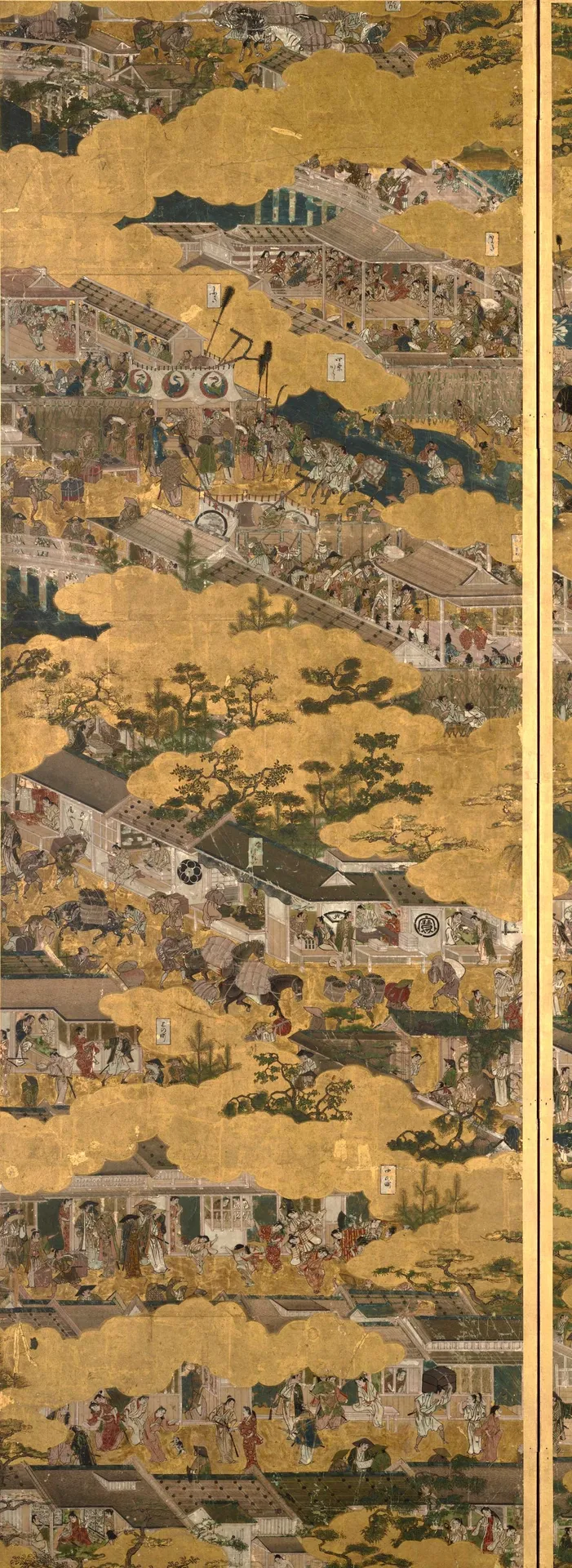
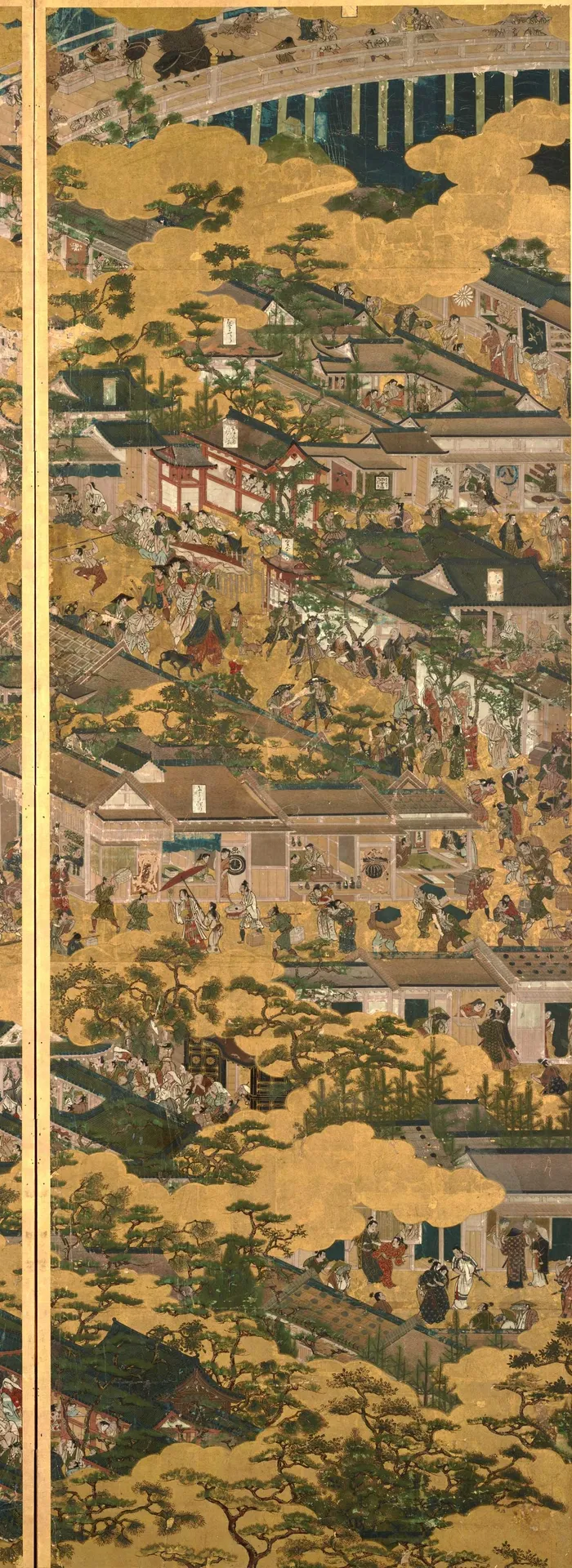
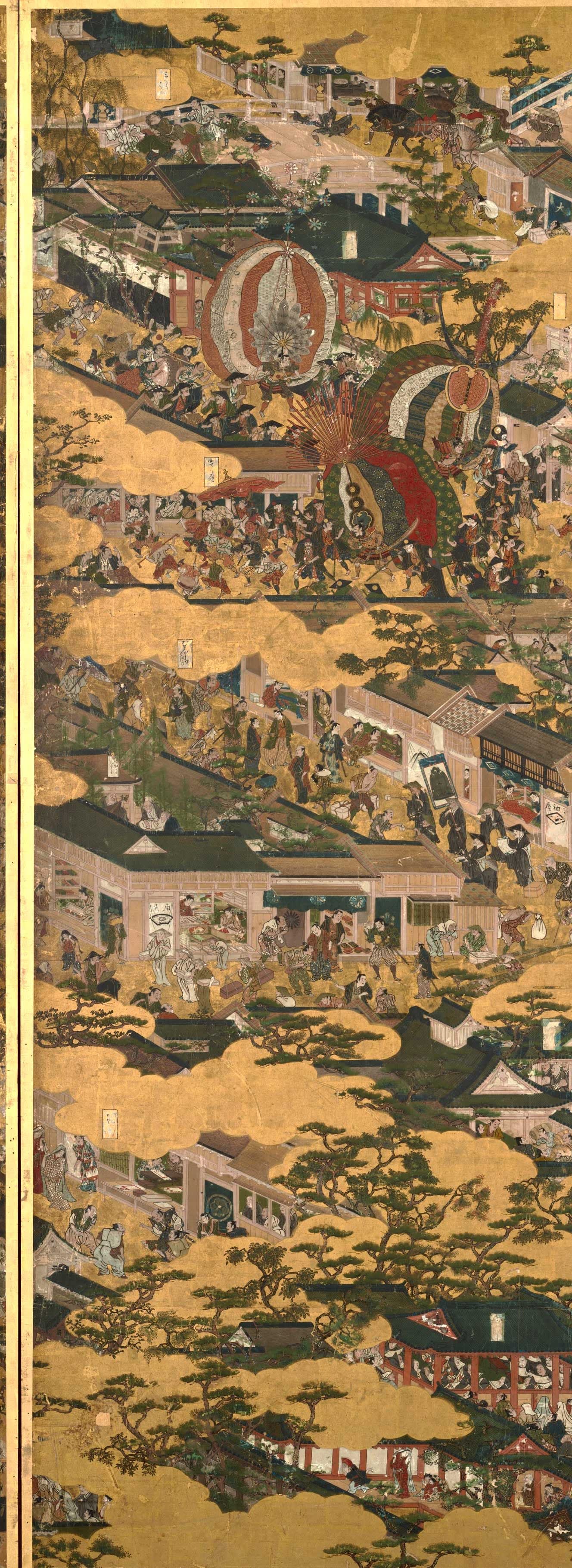
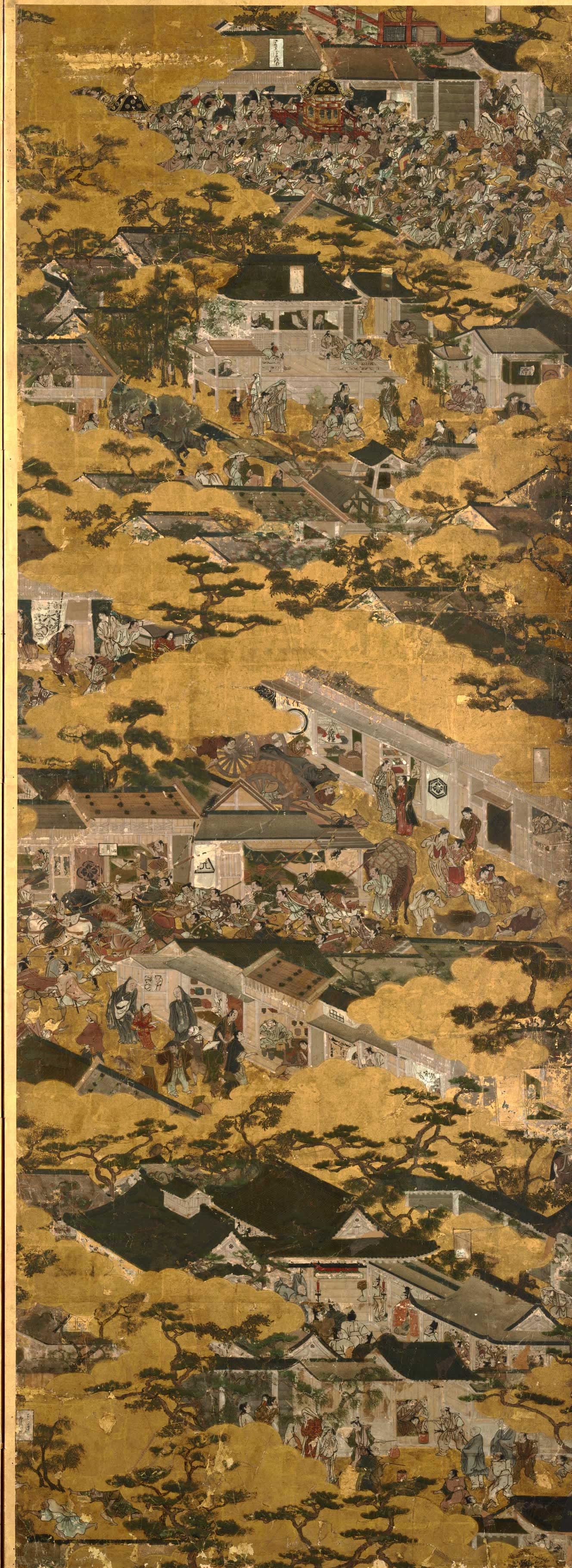
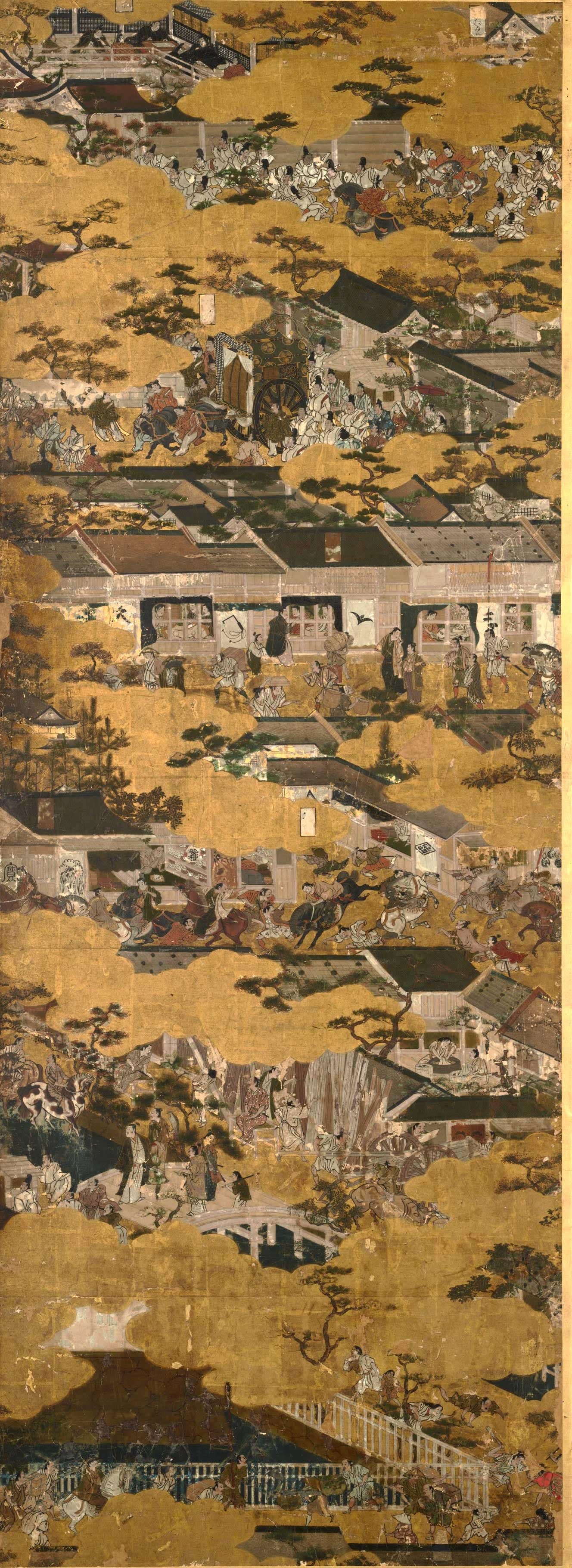
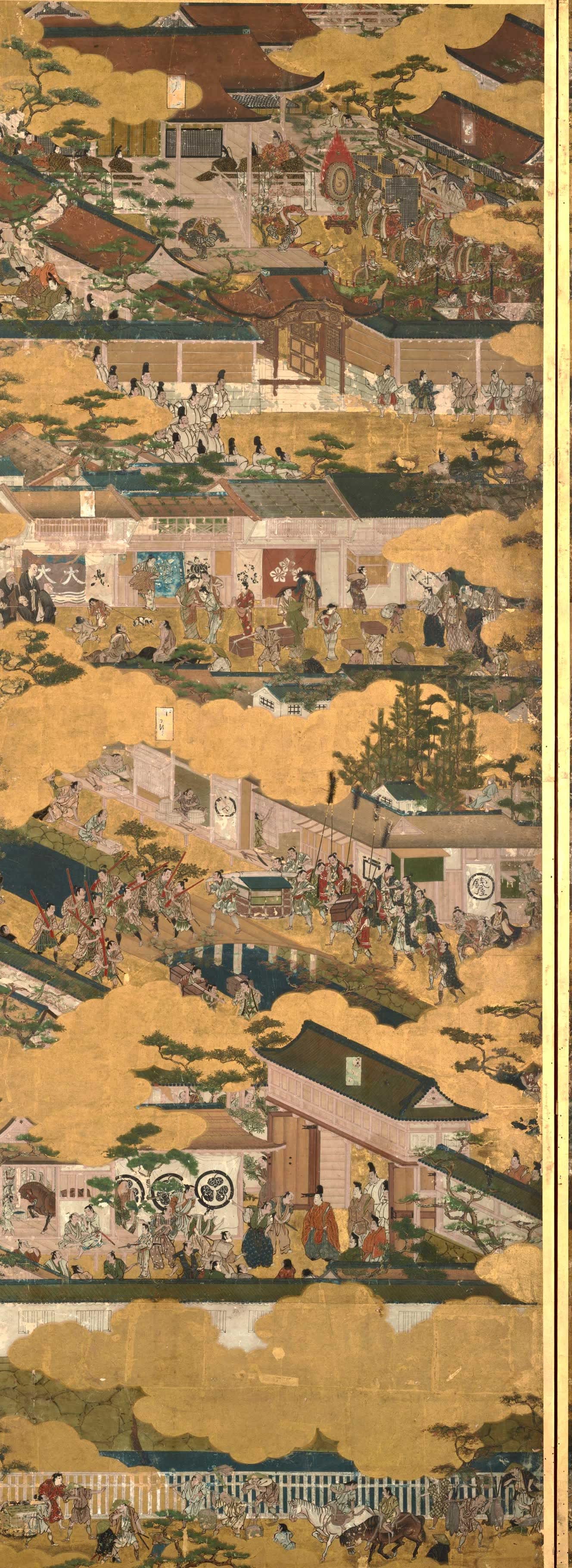
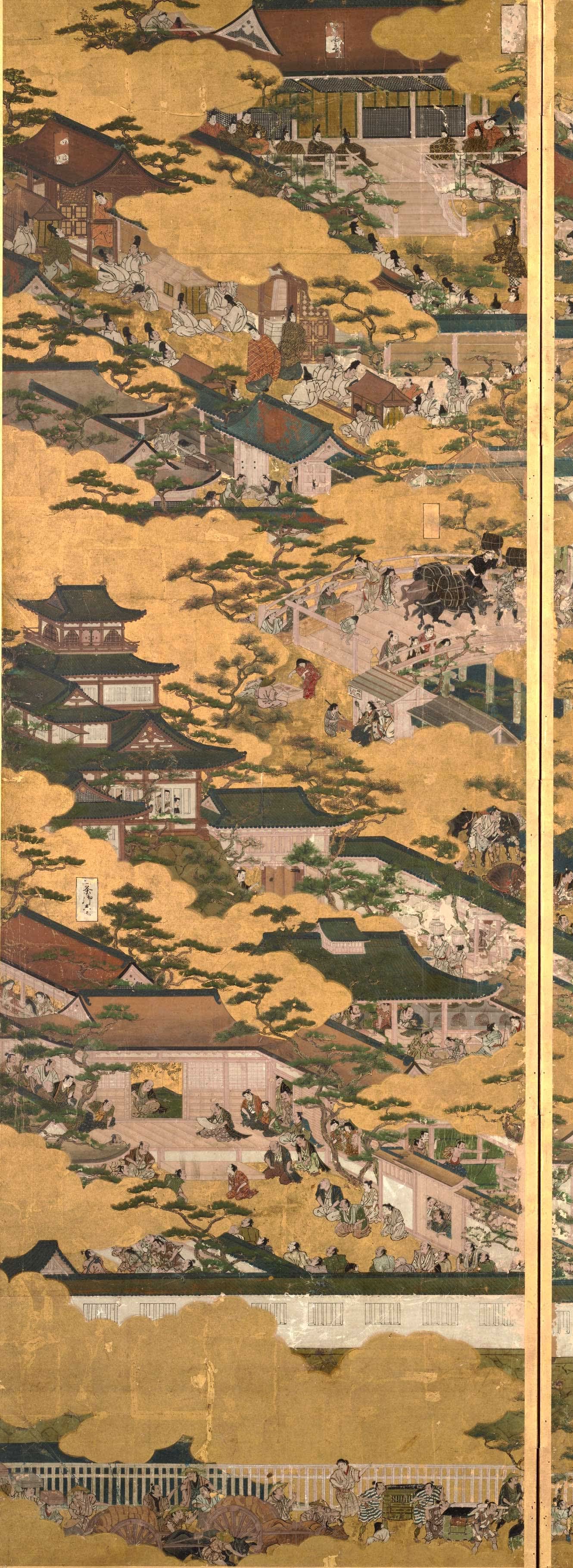
Rakuchū-rakugai-zu Folding Screens
Panoramic folding screens capturing Kyoto's cityscape, seasonal festivals, and vibrant daily life from the Sengoku to Edo periods. Compare three masterpieces in horizontal scroll.
Composition Lineages
Screen layout shifts by period and patron: compare the spatial pairing of the Right (East) and Left (West) screens.
Second Form (Edo Standard) — Standard Edo-period composition contrasting Toyotomi's Hoko-ji Great Buddha Hall (right) with Tokugawa's Nijo Castle (left), seen in the Funaki and Burke/MET screens.
Left Scroll (West Anchor)
Nijo Castle (Tokugawa), Imperial Palace & Urban Amusements
Right Scroll (East Anchor)
Hoko-ji Great Buddha (Toyotomi), Toyokuni Shrine, Kiyomizu-dera & Gion Festival
Kyoto Sightseeing Map & Recommended Routes
Explore temples, rivers, and streets depicted in Rakuchu-Rakugai-zu screens on the map of Kyoto, and follow curated walking routes.
Key Motifs Across Scrolls
Compare how iconic Kyoto landmarks, rivers, and festivals are depicted across the three screens.
Great Buddha Hall (Hoko-ji)
Power & Castles
Visual apex of the right scroll in the Edo standard; the colossal Hoko-ji hall embodies Toyotomi memory.
Mimizuka (Ear Mound)
Power & Castles
Memorial mound built near Hoko-ji Great Buddha Hall following Toyotomi Hideyoshi's Korean campaigns.
Nijo Castle
Power & Castles
Counterpole on the left scroll, paired with the Great Buddha Hall as emblem of Tokugawa warrior government.
Imperial Palace (Shishinden & Seiryoden)
Power & Castles
Core of imperial rule; depicted across all composition lineages as the symbol of court ritual and authority.
Toyokuni Shrine & Mausoleum
Power & Castles
Shrines and mausolea to Hideyoshi; memorial architecture of Toyotomi power on the right scroll.
Kiyomizu-dera
Temples & Shrines
Icon of Higashiyama faith; a landmark of eastern Rakugai in every major composition lineage.